Blog
Devon Erickson: Background, STEM School Highlands Ranch Shooting, Trial, Conviction, and Public Impact


Devon Erickson became widely known following the STEM School Highlands Ranch shooting in Colorado on May 7, 2019. The incident, which resulted in the death of one student and injuries to several others, shocked the local community and reignited national conversations about school safety, youth violence, mental health, and the criminal justice system.
Before the attack, Erickson was an ordinary student whose name was unknown outside his community. After the shooting, however, he became the subject of extensive media coverage, criminal investigations, and legal proceedings. His case has since been examined by journalists, legal experts, educators, and researchers seeking to understand the factors surrounding school violence and its devastating consequences.
This article provides a factual overview of Devon Erickson’s background, the events of the STEM School Highlands Ranch shooting, the investigation, the trial, the verdict, and the broader lessons that emerged from the case. The focus is on verified information and the lasting impact on victims, families, schools, and communities.
BIO Summary
| Attribute | Details |
|---|---|
| Full Name | Devon Michael Erickson |
| Date of Birth | September 21, 2000 |
| Age | 25 years old |
| Birthplace | Highlands Ranch, Colorado, U.S. |
| Nationality | American |
| Education | STEM School Highlands Ranch (Grade 12 at time of incident) |
| Profession | None (incarcerated; former student) |
| Famous For | Convicted perpetrator of the 2019 STEM School Highlands Ranch shooting |
| Marital Status | Single |
| Current Status | Incarcerated |
| Sentence | Life without parole + 1,282 years |
Who Is Devon Erickson?
Devon Erickson is an American who was a student at STEM School Highlands Ranch in Colorado at the time of the 2019 school shooting. Prior to the incident, little public information was available about him, and he was not a public figure.
Following the shooting, Erickson became the focus of a large criminal investigation conducted by local and federal law enforcement agencies. His name quickly entered national headlines as authorities worked to determine what had happened, identify the victims, and gather evidence.
Today, discussions of Devon Erickson are primarily connected to the criminal case and its legal, social, and educational implications rather than any public career or professional accomplishments.
The STEM School Highlands Ranch Shooting
On May 7, 2019, a shooting occurred at STEM School Highlands Ranch in Douglas County, Colorado.
During the attack, students and staff were forced to seek shelter as law enforcement officers responded to the emergency. The incident resulted in the death of Kendrick Castillo, an 18-year-old student who was widely recognized for confronting one of the attackers in an effort to protect classmates. Several other students were injured during the attack.
Emergency responders quickly secured the school, treated victims, and began an extensive investigation. The tragedy deeply affected students, teachers, parents, and the wider Colorado community.
Investigation and Criminal Charges
Immediately after the shooting, investigators collected physical evidence, interviewed witnesses, reviewed surveillance footage, and analyzed digital records to reconstruct the events.
Authorities ultimately charged Devon Erickson with numerous serious offenses, including:
- First-degree murder
- Attempted first-degree murder
- Assault-related charges
- Weapons-related offenses
- Other criminal counts arising from the incident
The investigation was extensive due to the complexity of the case and the number of witnesses involved.
Prosecutors argued that the evidence demonstrated Erickson’s direct involvement in the attack. Defense attorneys challenged aspects of the prosecution’s case during the legal proceedings, as is typical in criminal trials.
The Trial and Verdict
The criminal trial attracted widespread media attention because of the seriousness of the crimes and the national interest in school violence cases.
During the proceedings, prosecutors presented testimony from witnesses, law enforcement personnel, forensic specialists, and other experts. Physical evidence, surveillance footage, and additional investigative findings formed significant parts of the case.
The defense presented its own arguments and questioned elements of the prosecution’s evidence, reflecting the adversarial process central to the American legal system.
Impact on Victims, Families, and the Community
While the legal proceedings received considerable attention, the lasting impact of the tragedy has been felt most deeply by victims, survivors, families, educators, and the local community.
The death of Kendrick Castillo left an enduring void for his family, friends, and classmates. His bravery has been honored through scholarships, memorials, and community recognition celebrating his courage and selflessness.
The tragedy became a reminder that acts of violence extend far beyond the immediate event, often affecting entire communities for years afterward.
Lessons from the Case
The STEM School Highlands Ranch shooting prompted renewed discussion about preventing violence in schools and supporting young people before crises occur.
Several themes emerged from public conversations surrounding the case:
School Safety
Schools across the United States continued evaluating emergency response procedures, communication systems, and campus security measures.
Mental Health Support
Many experts emphasized expanding access to counseling services, early intervention, and mental health resources for students experiencing emotional distress.
Threat Assessment
Educational institutions increasingly adopted multidisciplinary threat assessment teams designed to identify concerning behaviors and intervene before situations escalate.
Community Collaboration
Law enforcement agencies, educators, parents, and mental health professionals highlighted the importance of working together to recognize warning signs and create supportive school environments.
Responsible Public Discussion
The case also reinforced the importance of focusing public attention on victims, survivors, and prevention efforts rather than sensationalizing perpetrators.
Public Interest and Media Coverage
Cases involving school shootings often receive intense media coverage because of their profound social impact.
Journalists covering the Devon Erickson case focused on court proceedings, investigative findings, victim stories, and broader policy discussions. Over time, many reports shifted attention toward honoring Kendrick Castillo and examining lessons that might help prevent future tragedies.
Although public curiosity about Erickson remains, many experts encourage centering conversations on survivors, victims, community recovery, and evidence-based prevention rather than on individuals responsible for violent crimes.
The Lasting Legacy of the Case
The lasting significance of the Devon Erickson case lies not in the notoriety of the offender but in its impact on public awareness and efforts to improve school safety.
The actions of Kendrick Castillo continue to inspire many people, serving as an example of extraordinary courage under unimaginable circumstances. Meanwhile, educators and policymakers continue working to strengthen school security, improve mental health services, and develop strategies for identifying potential risks before violence occurs.
Ultimately, the legacy of the case is defined by the resilience of survivors, the memory of those who were lost, and the continuing commitment to preventing similar tragedies in the future.
Conclusion
Devon Erickson became nationally known because of his role in the 2019 STEM School Highlands Ranch shooting, a tragedy that claimed the life of Kendrick Castillo and injured several others. The subsequent investigation, trial, and conviction established legal accountability while drawing attention to broader issues surrounding school safety and violence prevention.
Although the case remains a significant part of recent American criminal justice history, its most important lessons come from the experiences of victims, families, educators, and communities working to heal and prevent future acts of violence.
Frequently Asked Questions (FAQs)
Who is Devon Erickson?
Devon Erickson is the individual convicted in connection with the 2019 STEM School Highlands Ranch shooting in Colorado.
What happened at STEM School Highlands Ranch?
On May 7, 2019, a school shooting resulted in the death of student Kendrick Castillo and injuries to several other people.
Who was Kendrick Castillo?
Kendrick Castillo was an 18-year-old student who confronted one of the attackers during the shooting in an effort to protect classmates. He was widely honored for his bravery.
What charges was Devon Erickson convicted of?
He was convicted on multiple felony counts, including first-degree murder and attempted first-degree murder, among other offenses related to the attack.
Why is the case significant?
The case prompted national discussions about school safety, mental health support, violence prevention, and emergency preparedness.
What lessons emerged from the case?
Experts have emphasized the importance of early intervention, school safety planning, mental health resources, threat assessment programs, and community collaboration to help reduce the risk of future violence.
How is the tragedy remembered today?
The tragedy is remembered through support for survivors, memorials honoring Kendrick Castillo, and ongoing efforts to improve school safety and violence prevention.

Casa Wabi is a distinctive contemporary art foundation located on the Pacific coast of Oaxaca, Mexico, near Puerto Escondido. Created through the initiative of Mexican artist Bosco Sodi, the foundation brings together contemporary art, architecture, nature, and local communities. Its principal headquarters were designed by renowned Japanese architect Tadao Ando, creating an unusual environment where concrete architecture, coastal landscape, studios, gardens, exhibitions, and community programs exist together.
The name Casa Wabi comes from the Japanese concept of wabi-sabi, an aesthetic philosophy associated with simplicity, imperfection, transience, and the beauty found in natural materials and ordinary experiences. Casa Wabi applies these ideas through artistic residencies, exhibitions, clay programs, cinema, and a mobile library while encouraging connections between international artists and communities along the Oaxacan coast.
What Is Casa Wabi?
Fundación Casa Wabi is a nonprofit civil association established in 2014 with a mission centered on social development and international cultural exchange through art. Rather than functioning simply as a conventional gallery or museum, Casa Wabi combines artist residencies, exhibitions, community projects, education, architecture, and cultural activities.
The foundation works with 14 local communities along the Oaxacan coast through its community programs. Its activities are organized around five major areas: residencies, exhibitions, clay, cinema, and a mobile library. The goal is to create meaningful exchanges between contemporary artistic practices and the people and environment of the region.
Casa Wabi also has a presence beyond its Puerto Escondido headquarters. The foundation operates Casa Wabi Sabino in Mexico City and Casa Nano in Tokyo, extending its artistic and cultural network internationally.
Casa Wabi Architecture by Tadao Ando
Architecture is one of the defining features of Casa Wabi. The main headquarters were designed by Japanese architect Tadao Ando, whose minimalist use of concrete, light, geometry, and landscape is particularly evident at the coastal complex.
The principal project was completed in 2014. Casa Wabi’s architecture faces the Pacific Ocean and shares approximately 550 meters of coastline with the beach. One of its most recognizable elements is a 312-meter-long concrete wall, approximately 3.6 meters high, which separates public and private areas of the complex.
The architecture does not attempt to overpower its surroundings. Instead, the design establishes a relationship between ocean, sky, vegetation, sunlight, concrete, and open space. This relationship is especially important for artists living and working at the foundation, because the natural environment becomes part of their daily creative experience.
The wider architectural landscape has also expanded beyond Ando’s original complex. Casa Wabi’s grounds include projects by architects including Álvaro Siza, Kengo Kuma, Alberto Kalach, Bernardo Quinzaños Oria, Ambrosi-Etchegaray, Solano Benítez, and Gloria Cabral.
Artist Residencies and Creative Exchange
One of Casa Wabi’s central activities is its artist residency program. The setting gives participating artists time to develop their practices while interacting with other artists, the landscape, and nearby communities.
The foundation emphasizes cultural cross-fertilization, meaning that residents are encouraged to establish meaningful relationships with communities surrounding Casa Wabi rather than working in isolation. Its residency programs can therefore involve both individual artistic development and community engagement.
The foundation’s Casa Wabi x ArtReview Residency Prize continued in 2026, marking its ninth iteration. The 2026 program selected three artists interested in cultural exchange and creative dialogue with communities around Puerto Escondido.
Casa Wabi’s residency opportunities demonstrate how contemporary art can function as a bridge between international creative practices and local knowledge. Artists can respond to the physical environment, local materials, cultural traditions, and community experiences while developing new work.
Exhibitions at Casa Wabi in 2026
Casa Wabi also maintains an exhibition program that connects contemporary artworks with its distinctive architecture and surrounding landscape. The Puerto Escondido exhibition space includes a 450-square-meter gallery designed by Tadao Ando.
For 2026, one of the foundation’s featured exhibitions is “From Popocatépetl to the Pacific” by Richard Long, scheduled from January 31, 2026, through January 3, 2027, at Casa Wabi Puerto Escondido.
The exhibition program has previously featured internationally recognized artists including Chiharu Shiota, José Dávila, Claudia Comte, Huma Bhabha, Ugo Rondinone, Jannis Kounellis, Daniel Buren, and Lawrence Weiner. This history illustrates the foundation’s continuing relationship with contemporary art from Mexico and around the world.
Casa Wabi Sabino in Mexico City also hosts exhibitions. In 2026, its listed programming includes “Lo que nos imagina” by Irving Villegas and “Discreta Ficción” by Carlos Lara, both scheduled from July 11 through September 27, 2026.
Community Programs: Clay, Cinema and Mobile Library
Casa Wabi’s work extends beyond gallery exhibitions and artist residencies. Its community programs are designed to encourage access to creative and educational activities in nearby communities.
The Clay program is particularly connected to local culture and materials. It is directed toward children in primary and secondary schools in surrounding communities and seeks to reinforce the cultural and economic importance of local clay through hands-on creative experiences.
The cinema program introduces national and international films while supporting workshops and encounters related to audiovisual expression. Meanwhile, the Mobile Library forms part of the foundation’s reading initiatives and helps bring books and literary activities to communities.
These programs reflect Casa Wabi’s broader philosophy: art is not treated only as something displayed inside a gallery but as a means of education, community interaction, cultural exchange, and social development.
Casa Wabi’s Gardens, Landscape and Artistic Interventions
The landscape surrounding Casa Wabi is an essential part of the experience. The foundation’s grounds include a botanical garden developed by Mexican architect Alberto Kalach, with an objective of preserving and cataloging local plant species while promoting environmental education.
Additional architectural and artistic interventions have expanded the site over time. These include the Clay Pavilion designed by Álvaro Siza, a Chicken Coop by Kengo Kuma, an Orchid Pavilion by Bernardo Quinzaños Oria, and other structures and artworks integrated into the landscape.
The result is more than a collection of buildings. Casa Wabi functions as an environment where architecture, sculpture, gardens, local materials, ocean views, and artistic practice interact.
Visiting Casa Wabi in 2026
Visitors who want to experience Casa Wabi Puerto Escondido should plan ahead. According to the foundation’s official visitor information, all visits take place through guided tours and require advance reservations. Tours last approximately 1.5 to 2 hours.
The current published tour schedule is Monday through Friday at 10:00 a.m., 12:00 p.m., and 4:00 p.m. Weekend tours are listed at 10:00 a.m., 12:00 p.m., and 2:00 p.m. The foundation recommends reserving in advance because tours can reach capacity from one day to several weeks ahead depending on the season.
The published general admission donation is MXN $600, while certain Mexican students, teachers, and INAPAM cardholders receive discounts. Children under 12 and qualifying Oaxaca residents are listed as eligible for free admission under the foundation’s current visitor policy.
Final Thoughts on Casa Wabi
Casa Wabi is more than a contemporary art destination. It is an evolving meeting point for art, architecture, nature, education, and community life on the Oaxacan coast.
Its identity comes from the combination of Bosco Sodi’s artistic initiative, Tadao Ando’s architecture, the Pacific landscape, international artist residencies, exhibitions, local community programs, and a continuing commitment to cultural exchange. The foundation’s 2026 programming demonstrates that this model remains active, with exhibitions, residency prizes, architectural projects, and community initiatives continuing to develop.
Casa Wabi’s enduring idea is therefore simple but ambitious: art can connect people, places, cultures, and environments. Its combination of minimalist architecture and community-focused artistic programming makes it a distinctive cultural institution in Mexico and an increasingly visible part of the international contemporary art landscape.
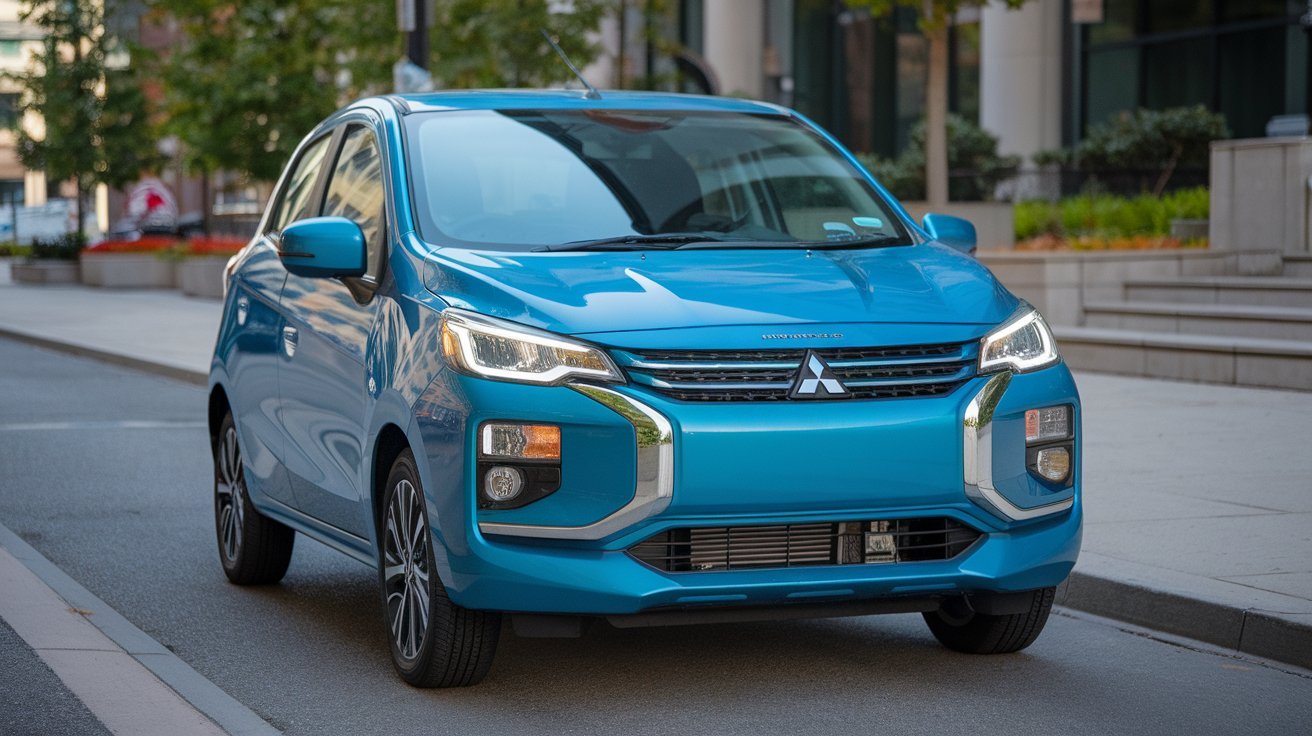
The 2024 Mitsubishi Mirage is a small hatchback built around a simple idea: provide affordable transportation with strong fuel economy, practical cargo space, useful standard technology, and an unusually long warranty. As one of the final subcompact hatchbacks available in the U.S., the 2024 Mirage occupies a distinctive place in the market.
For shoppers researching the Mitsubishi Mirage 2024 today, there is also an important piece of history to understand. Mitsubishi discontinued the Mirage line in the United States after the 2024 model year, with production ending and remaining dealer inventory expected to continue into 2025. That makes the 2024 model especially relevant to people looking for a compact used car with low running costs.
What Is the 2024 Mitsubishi Mirage?
The 2024 Mitsubishi Mirage is a five-passenger front-wheel-drive hatchback powered by a compact 1.2-liter three-cylinder gasoline engine. Its design prioritizes fuel efficiency, affordability, maneuverability, and practicality rather than high performance.
The Mirage measures approximately 151.4 inches long, 65.6 inches wide, and 59.4 inches high, with a 96.5-inch wheelbase. Its small dimensions make it particularly convenient for urban driving, parking, and navigating crowded streets.
Mitsubishi offered the 2024 Mirage in several trim configurations, including ES, LE, BE, and SE, depending on market and equipment configuration. The official 2024 brochure lists the 1.2-liter MIVEC three-cylinder engine, CVT transmission, 9.2-gallon fuel tank, and 39 mpg combined fuel-economy rating for the Mirage hatchback.
2024 Mitsubishi Mirage Engine and Performance
Under the hood, the 2024 Mitsubishi Mirage uses a 1.2-liter MIVEC DOHC three-cylinder engine producing 78 horsepower and 74 lb-ft of torque. Front-wheel drive is standard, while a continuously variable transmission, or CVT, is the primary automatic transmission configuration.
The engine’s modest output reflects the Mirage’s purpose. It is designed primarily for economical transportation rather than acceleration or sporty handling. Independent testing has estimated approximately 10.6 to 10.9 seconds from zero to 60 mph, illustrating that the Mirage is much more focused on efficiency than speed.
For everyday city driving, the compact dimensions and relatively light curb weight can make the Mirage easy to maneuver. However, drivers should understand that the limited horsepower can become more noticeable during highway merging, passing, steep hills, or when carrying several passengers.
The CVT helps keep the small engine operating within its useful range, but it can also produce higher engine revs during hard acceleration. Consequently, the Mirage is best understood as a practical commuter rather than a performance-oriented hatchback.
2024 Mitsubishi Mirage MPG and Fuel Economy
One of the strongest reasons people consider the 2024 Mitsubishi Mirage is fuel economy. The EPA estimates the CVT-equipped Mirage at approximately 36 mpg city and 43 mpg highway, with a 39 mpg combined rating.
Mitsubishi’s official 2024 brochure likewise lists 39 combined MPG for the Mirage.
The car has a 9.2-gallon fuel tank, which is relatively small but appropriate for its compact size and efficient engine.
Fuel economy can vary depending on traffic, weather, tire condition, driving style, passenger load, and road conditions. Still, the Mirage’s ability to reach fuel-economy figures in the 40-mpg range on highway driving makes it attractive to drivers who prioritize reducing gasoline consumption.
Interior, Cargo Space and Technology
Inside, the Mirage provides seating for five people, although its compact dimensions mean rear-seat space is more limited than in larger vehicles. The front seats provide more usable room, while the rear bench is better suited to shorter trips or smaller passengers.
One of the hatchback’s practical advantages is its cargo flexibility. The 2024 Mirage provides approximately 17.1 cubic feet of cargo space with the rear seats up, expanding to about 47.0 cubic feet when the rear seatbacks are folded.
Technology is another area where the Mirage provides useful equipment despite its budget positioning. A 7-inch touchscreen infotainment system supports Apple CarPlay and Android Auto, while Bluetooth connectivity is also available.
Depending on trim, buyers could also find features such as automatic climate control, cruise control, upgraded lighting, and additional convenience equipment. For 2024, the mid-level LE gained features including a driver-seat-mounted center armrest, rain-sensing windshield wipers, and automatic headlights.
Safety Features and Driver Assistance
The 2024 Mitsubishi Mirage includes several useful safety technologies. Automated emergency braking with pedestrian detection is available as a standard feature across the Mirage range, helping provide additional protection when the system detects an impending collision.
Higher trims add equipment such as lane-departure warning and automatic high-beam headlights.
The Mirage’s safety package should nevertheless be viewed in the context of its age and segment. It does not provide the extensive collection of advanced driver-assistance systems found in many newer vehicles.
When evaluating a used 2024 Mirage, we should also check its individual vehicle history, maintenance records, tires, brakes, recalls, and accident history rather than relying only on model-level specifications.
Warranty, Maintenance and 2024 Pricing
Warranty coverage is one of the notable strengths of the 2024 Mitsubishi Mirage. Mitsubishi provided a 10-year/100,000-mile limited powertrain warranty, along with a 5-year/60,000-mile new-vehicle limited warranty and 5-year/unlimited-mile roadside assistance. The 2024 program also included 2 years or 30,000 miles of limited scheduled maintenance, according to Mitsubishi’s official brochure.
For original owners, Mitsubishi’s powertrain coverage was particularly significant. Buyers of used vehicles should verify exactly how much warranty coverage remains because certain portions of the warranty can have different transfer rules. Mitsubishi’s current information notes that subsequent owners receive the remaining balance of the applicable 5-year/60,000-mile new-vehicle limited warranty rather than the original-owner powertrain coverage terms.
The 2024 Mirage originally started around $18,015 for the ES according to Car and Driver’s specifications data, although actual transaction prices varied by trim, destination charges, dealer pricing, incentives, and options.
Is the 2024 Mitsubishi Mirage Still Worth Considering in 2026?
The 2024 Mitsubishi Mirage deserves consideration primarily for buyers who value low fuel consumption, compact dimensions, simple transportation, practical hatchback cargo space, and strong original warranty coverage.
However, there is an important distinction between buying one when it was new and buying one in 2026. Mitsubishi has discontinued the Mirage in the U.S., so today’s shoppers will generally be looking at used vehicles or remaining inventory rather than a current-production model. Mitsubishi confirmed that the Mirage would not return for the 2025 model year.
For a used-car buyer, the most important factors are the vehicle’s condition, mileage, service history, accident history, remaining warranty coverage, and purchase price. A well-maintained example can offer inexpensive transportation, while its modest engine output and basic cabin should be understood before purchase.
Frequently Asked Questions About the Mitsubishi Mirage 2024
How much horsepower does the 2024 Mitsubishi Mirage have?
The 2024 Mirage’s 1.2-liter three-cylinder engine produces 78 horsepower and 74 lb-ft of torque.
How many miles per gallon does a 2024 Mitsubishi Mirage get?
The CVT-equipped Mirage is rated at approximately 36 mpg city, 43 mpg highway, and 39 mpg combined by the EPA.
How much cargo space does the 2024 Mirage have?
The hatchback provides approximately 17.1 cubic feet behind the rear seats and up to 47.0 cubic feet with the rear seats folded.
Is the 2024 Mitsubishi Mirage discontinued?
Yes. Mitsubishi discontinued the Mirage in the U.S. after the 2024 model year, and there was no 2025 Mirage planned for the American market.
Does the 2024 Mirage have Apple CarPlay?
Yes. The 2024 Mirage includes a 7-inch touchscreen with Apple CarPlay and Android Auto compatibility.
What warranty did the 2024 Mirage have?
Mitsubishi advertised a 10-year/100,000-mile powertrain limited warranty, a 5-year/60,000-mile limited warranty, and 5-year/unlimited-mile roadside assistance, along with limited scheduled maintenance for two years or 30,000 miles.
Conclusion
The 2024 Mitsubishi Mirage represents the final chapter of Mitsubishi’s small U.S. hatchback. Its 78-horsepower three-cylinder engine, excellent fuel economy, compact dimensions, useful hatchback cargo area, smartphone connectivity, and extensive warranty coverage give it a clear focus: affordable everyday transportation.
While the Mirage is not designed for strong acceleration or luxury, its 39-mpg combined EPA rating, practical 17.1-to-47.0-cubic-foot cargo configuration, and straightforward mechanical package make the 2024 model an interesting option on the used-car market.
For buyers researching the Mitsubishi Mirage 2024 in 2026, the key is to look beyond the original sticker price and evaluate the individual vehicle’s maintenance history, mileage, condition, remaining warranty, and total ownership costs. With production now ended in the United States, the 2024 model also holds a specific place in the history of affordable subcompact hatchbacks.
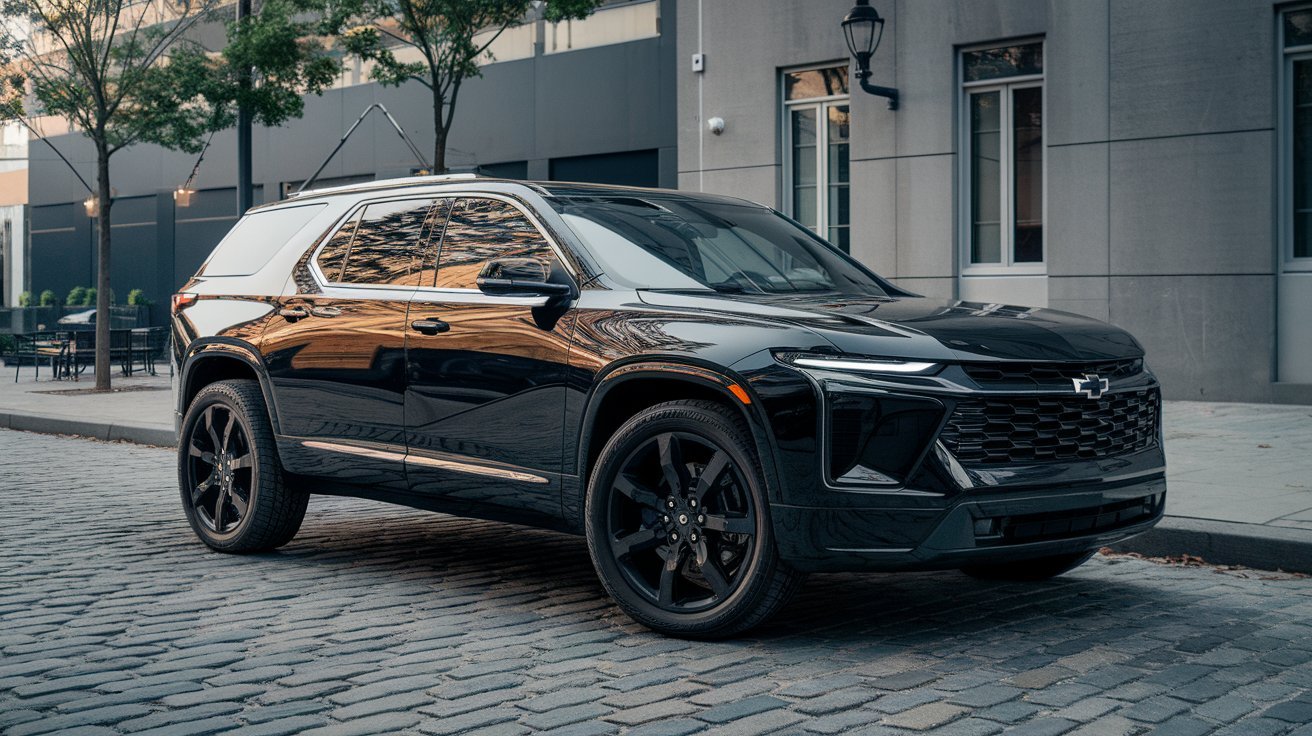
The 2025 Chevy Traverse RS is a sporty, technology-focused version of Chevrolet’s redesigned three-row midsize SUV. Positioned between the practical LT and the luxury-oriented High Country in the 2025 lineup, the RS combines the Traverse’s generous passenger and cargo capacity with RS styling, a turbocharged engine, large wheels, premium interior appointments, and advanced technology. Chevrolet lists the 2025 Traverse RS with a starting MSRP of $54,100, while an example equipped with additional equipment is shown at $56,095.
The RS is particularly notable because Chevrolet does not treat it as merely an appearance package. Along with distinctive exterior details, the trim includes a strong 2.5-liter turbocharged powertrain, a large 17.7-inch infotainment screen, flexible three-row seating, and a broad collection of standard and available driver-assistance technologies.
2025 Chevy Traverse RS Price and Trim Position
The 2025 Chevy Traverse RS occupies a premium position in the Traverse lineup. Chevrolet’s 2025 lineup includes LT, Z71, RS, and High Country configurations, with the RS starting at $54,100. The RS is available with either front-wheel drive or all-wheel drive, with Chevrolet listing the AWD RS at a starting price of $56,100.
The RS is designed around a sportier appearance than the LT, while the High Country emphasizes luxury and the Z71 focuses more heavily on off-road capability. This makes the RS configuration especially relevant to buyers who want a three-row family SUV with a more aggressive street-oriented design.
Pricing can vary based on destination charges, options, packages, dealer pricing, incentives, and vehicle availability. Therefore, the window sticker of a particular vehicle should be checked when comparing actual purchase prices.
Turbocharged Engine and Performance
Every 2025 Traverse uses a 2.5-liter turbocharged four-cylinder engine paired with an 8-speed automatic transmission. The engine produces 328 horsepower and 326 lb-ft of torque, giving the Traverse considerably more output than many conventional four-cylinder three-row SUVs.
Front-wheel drive is available on the RS, while all-wheel drive provides another configuration for buyers who want additional traction. Chevrolet also offers an AWD system designed around the Traverse’s different configurations.
The Traverse can tow up to 5,000 pounds when properly equipped, with Chevrolet noting that the required trailering equipment is included for this capability. The available trailering setup includes equipment such as a heavy-duty cooling system and additional hardware designed for towing.
Fuel economy depends on drivetrain and configuration. Chevrolet lists the 2025 Traverse at up to 20 mpg city and 27 mpg highway in a front-wheel-drive configuration, while all-wheel-drive versions have lower EPA estimates.
RS Exterior Design and Sporty Styling
The 2025 Chevy Traverse RS stands out visually with a collection of features specifically intended to give the SUV a sportier appearance. Chevrolet describes the RS as a sporty and sleek version of the Traverse.
Standard RS styling includes RS badging, blackout exterior details, a dark grille, black roof rails, and 22-inch high-gloss Black-painted aluminum wheels.
The large wheels significantly change the visual character of the SUV compared with the more straightforward LT configuration. The RS also receives a flat-bottom steering wheel and red interior accents, creating a consistent sporty theme between the exterior and cabin.
The overall Traverse design is substantially larger and more upright than many five-seat crossovers. Chevrolet lists a vehicle length of approximately 204.5 inches, a 121-inch wheelbase, and a maximum width of 79.5 inches without mirrors.
2025 Traverse RS Interior and Seating
One of the biggest strengths of the 2025 Chevy Traverse RS is its three-row interior. The RS seats seven people, using second-row captain’s chairs. Chevrolet offers a second-row bench on the LT, which can increase seating capacity to eight, but the RS is configured around a seven-passenger layout.
Inside the RS, Chevrolet uses Jet Black leather-appointed seats with red accents, reinforcing the trim’s performance-inspired appearance. The RS also receives heated front and rear seating and a heated steering wheel among its equipment.
Passenger space is another major consideration. Chevrolet lists up to 44.3 inches of front legroom and 41.4 inches of second-row legroom, while the third row is designed to be substantially more usable than the cramped rear seats found in some three-row SUVs.
The RS and High Country also include One-Touch Fold second-row seats and power-folding second- and third-row seating, making it easier to change between passenger and cargo configurations.
Cargo Space and Family Practicality
The Traverse is engineered around families that regularly need substantial cargo capacity. Chevrolet claims 98 cubic feet of maximum cargo volume, placing the 2025 Traverse among the larger cargo carriers in the midsize three-row SUV category.
The flexible seating arrangement means owners can fold rear seats when carrying larger items. With the third row folded, there is considerably more usable luggage space, while folding additional rows creates a large load floor for bulky equipment.
A hands-free power liftgate is another practical feature, making it easier to load groceries, luggage, sports equipment, or other cargo when both hands are occupied. Chevrolet lists this feature as standard in its 2025 Traverse comparison information.
The combination of three-row seating and substantial maximum cargo capacity gives the Traverse RS a dual personality: it can function as a family transporter during the week and a large cargo vehicle when the rear seats are folded.
Technology, Screens, and Connectivity
Technology is one of the most noticeable aspects of the new-generation Traverse. The 2025 Chevy Traverse RS comes with a 17.7-inch diagonal color touchscreen and an 11-inch diagonal driver information center.
The large center display supports Google built-in, giving occupants access to services and applications such as Google Assistant, Google Maps, and Google Play directly through the vehicle’s infotainment system.
The Traverse also offers wireless smartphone connectivity and charging, while available HD Surround Vision can provide a more comprehensive view around the vehicle during parking and low-speed maneuvering.
Another significant technology option is Super Cruise, Chevrolet’s hands-free driver-assistance system. Chevrolet says available Super Cruise provides access to hundreds of thousands of compatible road miles in the United States and Canada. The system is designed for use on compatible roads and requires drivers to remain attentive.
Safety and Driver-Assistance Features
The 2025 Traverse includes an extensive collection of safety and driver-assistance technologies. Chevrolet identifies features such as Automatic Emergency Braking, Front Pedestrian and Bicyclist Braking, Blind Zone Steering Assist, Rear Cross Traffic Braking, and Safety Alert Seat among the Traverse’s available or standard safety equipment.
Additional systems can help drivers monitor surrounding traffic, identify potential hazards, and manage certain driving situations. However, these technologies are designed to assist rather than replace the driver. Chevrolet specifically notes that weather, visibility, traffic, and road conditions can affect system performance.
For buyers considering a particular RS, it is important to verify the exact equipment because some technologies can depend on the selected configuration or package.
2025 Chevy Traverse RS: What Makes It Different?
The 2025 Chevy Traverse RS brings together the practical strengths of a three-row SUV with a distinctly sportier appearance. Its 328-horsepower turbocharged engine, available AWD, 5,000-pound towing capability, 22-inch wheels, blacked-out styling, red interior accents, and premium technology give it a recognizable identity within the Traverse range.
At the same time, the RS retains the qualities that make the Traverse useful as a family vehicle: seven-passenger seating, flexible rear seats, substantial cargo capacity, a large infotainment display, and available hands-free driving technology.
For 2025, the Traverse RS therefore represents a configuration aimed at buyers who want their three-row SUV to combine family practicality with a bold, street-focused design. Exact prices and equipment can vary by drivetrain, packages, options, destination charges, and market availability, so checking the specifications of the individual vehicle remains important when shopping for a 2025 Chevy Traverse RS.

Osprey Arcane Flap Pack: Complete 2026 Guide

Pedal Ditto Looper TC Electronic: Complete Guide for Guitarists in 2026

Casa Wabi: Architecture, Art, Residencies, Exhibitions and Visitor Guide 2026

Mary Jo Campbell: The Life, Family, and Lasting Influence of the Kardashian-Jenner Matriarch

AI Design and Pictures of Editor Made Simple for Stunning Creations

Destiny Pérez: Biography, Career, Public Recognition, and Growing Influence
 Celebrity3 months ago
Mary Jo Campbell: The Life, Family, and Lasting Influence of the Kardashian-Jenner Matriarch
- Technology4 months ago
AI Design and Pictures of Editor Made Simple for Stunning Creations
- Celebrity4 months ago
Destiny Pérez: Biography, Career, Public Recognition, and Growing Influence
- Celebrity4 months ago
Seryl Kushner: The Private Life and Lasting Influence of a Prominent Family Figure
- Technology4 months ago
AlphaInnovate.com Review: Features, Pros, Cons, and What You Should Know Before Using the Platform
- Technology4 months ago
5 Simple Tricks to Prevent Wear on Your Vehicle
- Blog3 months ago
Spell Tieing or Tying: Which Is Correct? Complete Grammar and Spelling Guide (2026)
- Food3 months ago
Best Cazon con Tomate Near Me: Where to Find This Spanish Seafood Dish in 2026