Birds
Red Breast: Complete Guide to the Robin Bird, Habitat, Diet, Behavior and Facts

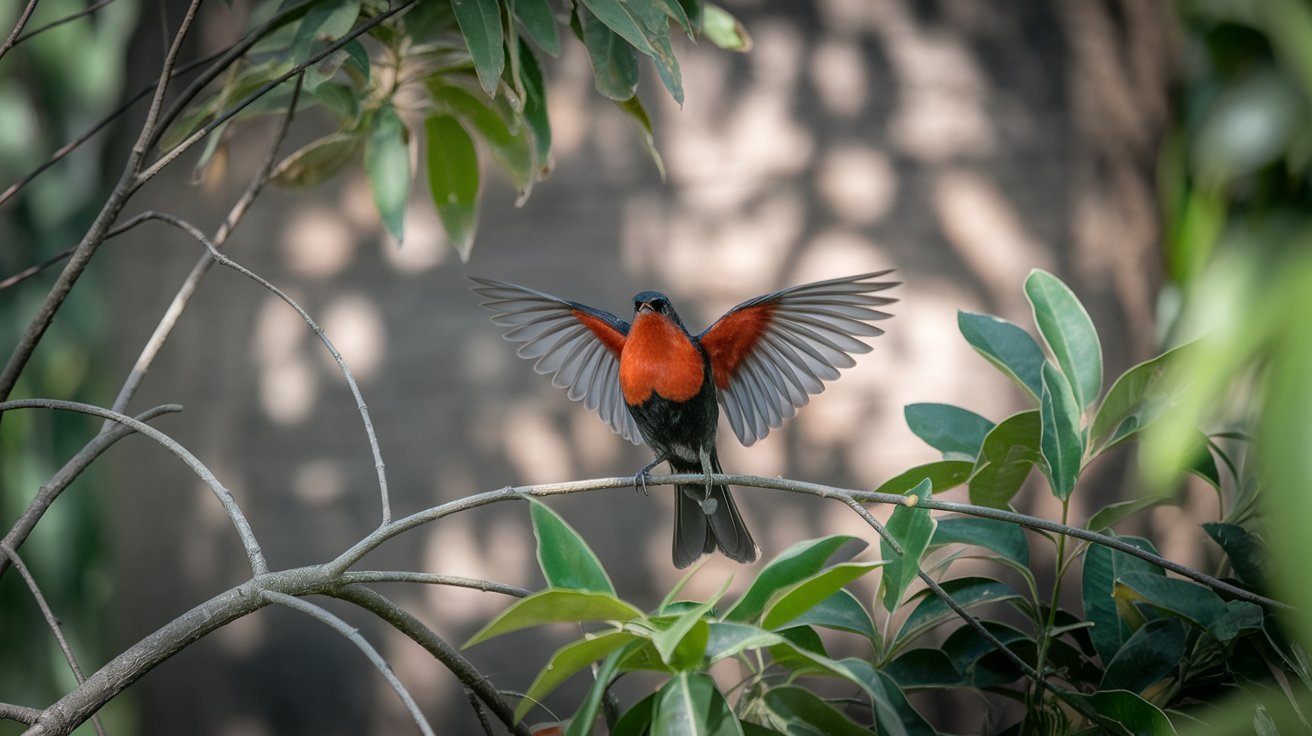
The red breast is one of the most recognizable features in the natural world, especially when describing the European robin, scientifically known as Erithacus rubecula. Often called the robin redbreast, this small bird is famous for its bright orange-red breast, friendly appearance, beautiful song, and remarkable confidence around people. In Britain and Ireland, the robin is one of the most familiar garden birds and can be encountered throughout the year.
Although the robin looks gentle and approachable, its behavior is surprisingly bold. It is a highly territorial bird that can aggressively defend its feeding and breeding area. From gardens and parks to woodland edges and farmland, the red-breasted robin has adapted extremely well to environments shared with humans.
What Is the Red Breast Bird?
When people use the term “red breast” to describe a bird, they are often referring to the European robin. Its scientific name is Erithacus rubecula, and it belongs to the Old World flycatcher family, Muscicapidae. The bird is commonly known simply as the robin, although redbreast is also an established English folk name.
An adult robin has a distinctive orange-red face, throat, and breast, contrasting with its brown back and pale underside. Its short, thin bill and compact body make it easy to identify. Adults typically measure around 14 centimeters long, with a wingspan of approximately 20–22 centimeters and a weight generally in the range of 14–21 grams.
One interesting feature is that male and female robins look almost identical. This means the red breast cannot be used to distinguish the sexes. Young robins are also very different: instead of the famous red breast, juveniles have speckled golden-brown plumage.
Why Does the Robin Have a Red Breast?
The robin’s bright breast and face are among its most important visual characteristics. The colorful plumage makes the bird immediately recognizable, but it also plays a role in territorial behavior.
Robins are famously territorial. An individual may defend its area from other robins, particularly during breeding periods. The bird’s seemingly harmless appearance therefore hides a remarkably assertive personality. The Natural History Museum describes the robin as a highly territorial species that aggressively protects its territory.
This territorial nature also explains why you may frequently see one robin at a time in a garden. Robins generally do not tolerate rivals inside their established territory. Their confidence around humans is a separate trait and can make them appear unusually friendly.
Where Do Red-Breasted Robins Live?
The European robin is widely distributed across Britain and Ireland and is found in many different environments. Suitable habitats include deciduous woodland, scrub, farmland, villages, towns, parks, gardens, hedgerows, and areas with dense vegetation.
Robins are particularly successful around gardens because these areas can provide both food and shelter. A garden with shrubs, trees, leaf litter, soil, and natural ground cover can offer excellent opportunities for feeding.
The species is present throughout the year in many parts of its range. In Britain, resident birds are joined by some winter visitors from northern and eastern Europe, particularly during colder periods.
This year-round presence is one reason the robin has become such a familiar part of the British countryside and urban landscape.
What Do Red Breast Robins Eat?
A robin has a varied diet consisting largely of insects and other small invertebrates, but it also eats seeds and fruit. Common food items include worms, insects, spiders, larvae, seeds, and berries.
Robins are especially entertaining to watch in gardens because they often follow people who are digging or gardening. Turning over soil can expose worms, grubs, and other small creatures, creating an easy feeding opportunity.
Unlike many seed-eating garden birds that spend considerable time on hanging feeders, robins are naturally ground feeders. A low feeding tray can therefore be more useful for them than a high hanging feeder. Natural food sources should remain an important part of any wildlife-friendly garden.
If you want to encourage robins, providing insects, suitable ground-feeding areas, shrubs, leaf litter, and safe cover can help make a garden more attractive to them.
Red Breast Robin Song and Behavior
The robin is not famous only because of its appearance. Its song is another major identifying feature. Robins sing for much of the year, producing a delicate series of high-pitched notes, twitters, trills, and melodic phrases.
One unusual characteristic is that robins can sometimes sing at night, particularly around artificial lighting. They are also among the early singers during the morning chorus.
Their behavior around humans can be remarkably bold. A robin may perch nearby while someone works in the garden and then move onto freshly turned soil to search for prey. This has helped establish the bird’s reputation as a gardener’s companion.
However, their confidence should not be confused with weakness. Behind the friendly appearance is a strongly territorial bird that may vigorously chase competitors away from its chosen area.
Nesting, Breeding and Young Robins
Robins have flexible nesting habits and can take advantage of unusual locations. Their nests may be built in vegetation, containers, sheltered spaces, and other suitable cavities or partially enclosed locations. Unlike many hole-nesting birds, robins commonly prefer an open-fronted nest box rather than a conventional box with a small circular entrance.
A typical clutch contains around four or five eggs, and robins can produce two or three broods during the spring and summer breeding period.
Young robins are particularly easy to distinguish from adults. Instead of having the famous red breast, they are covered in speckled brown and golden plumage. The characteristic adult coloration develops later.
According to the Natural History Museum, chicks can leave the nest at roughly 14 days, although they remain dependent on parental care afterward.
Red Breast Robin Conservation and How to Help
The European robin remains a common and widely distributed bird, and in Britain it is currently classified on the Green List of Birds of Conservation Concern.
Even common species benefit from wildlife-friendly gardens and healthy natural habitats. You can help robins by maintaining dense shrubs, native vegetation, insect-friendly plants, leaf litter, and safe nesting locations.
Avoid excessive disturbance around suspected nests, and keep cats and other predators away from vulnerable nesting areas when possible. Providing clean water can also benefit garden birds, particularly during periods of extreme weather.
An open-fronted nest box positioned in suitable cover can provide a potential nesting location for robins. Because robins are territorial, however, providing habitat is not a guarantee that a pair will occupy a particular nest box.
Final Thoughts on the Red Breast Robin
The red breast robin combines a distinctive appearance with fascinating behavior. Its bright orange-red breast, brown back, melodic song, ground-feeding habits, and confidence around people make it one of the easiest and most enjoyable birds to recognize.
Despite its small size and gentle appearance, the robin is bold, territorial, adaptable, and remarkably resilient. It can live successfully in woodland, farmland, parks, villages, and gardens, making it a familiar sight in both rural and urban environments.
For birdwatchers and gardeners, spotting a robin can be a memorable experience. Whether it is perched on a fence, following someone digging the soil, singing from a tree branch, or searching beneath shrubs for insects, the red-breasted robin remains one of nature’s most recognizable small birds.


Casa Wabi: Architecture, Art, Residencies, Exhibitions and Visitor Guide 2026

Red Breast: Complete Guide to the Robin Bird, Habitat, Diet, Behavior and Facts

YouTube K-Pop Demon Hunters: Complete Guide to Videos, Music, Characters, and Fandom

Mary Jo Campbell: The Life, Family, and Lasting Influence of the Kardashian-Jenner Matriarch

AI Design and Pictures of Editor Made Simple for Stunning Creations

Destiny Pérez: Biography, Career, Public Recognition, and Growing Influence
 Celebrity2 months ago
Mary Jo Campbell: The Life, Family, and Lasting Influence of the Kardashian-Jenner Matriarch
- Technology3 months ago
AI Design and Pictures of Editor Made Simple for Stunning Creations
- Celebrity2 months ago
Destiny Pérez: Biography, Career, Public Recognition, and Growing Influence
- Celebrity2 months ago
Seryl Kushner: The Private Life and Lasting Influence of a Prominent Family Figure
- Technology2 months ago
AlphaInnovate.com Review: Features, Pros, Cons, and What You Should Know Before Using the Platform
- Blog2 months ago
Spell Tieing or Tying: Which Is Correct? Complete Grammar and Spelling Guide (2026)
- Technology3 months ago
5 Simple Tricks to Prevent Wear on Your Vehicle
- Blog2 months ago
Friday in Spanish: Meaning, Pronunciation, Usage, and Cultural Importance